
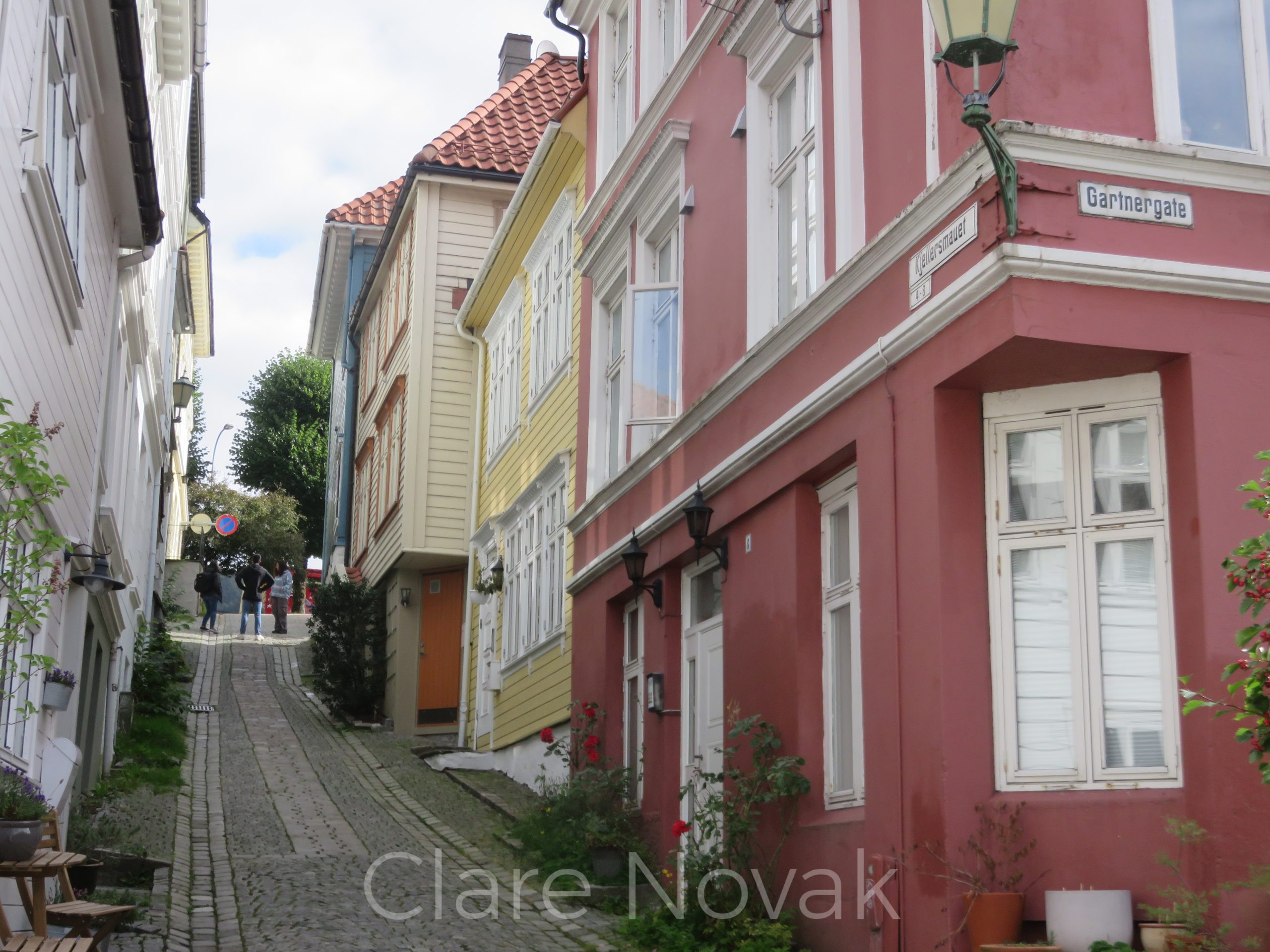
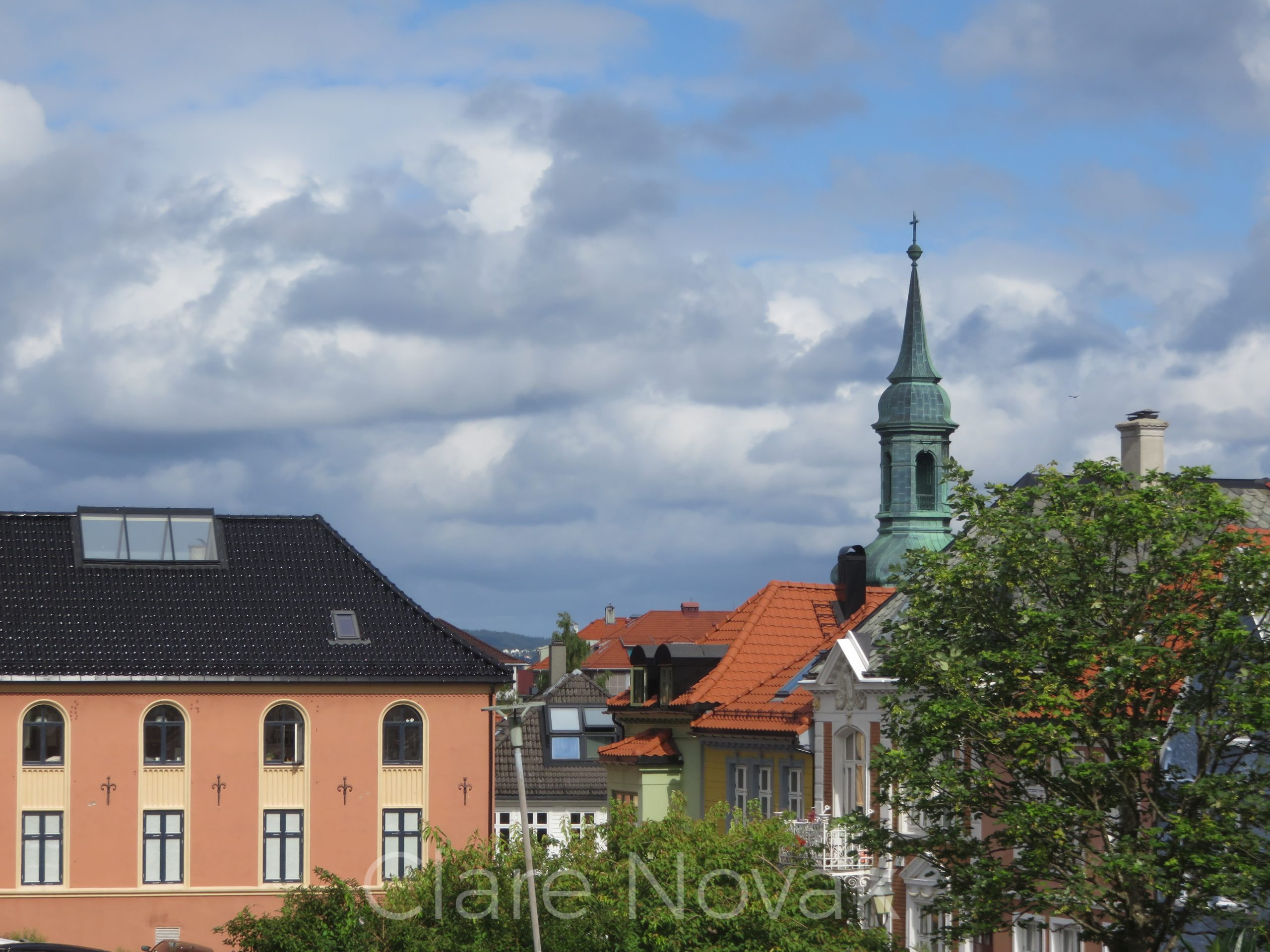


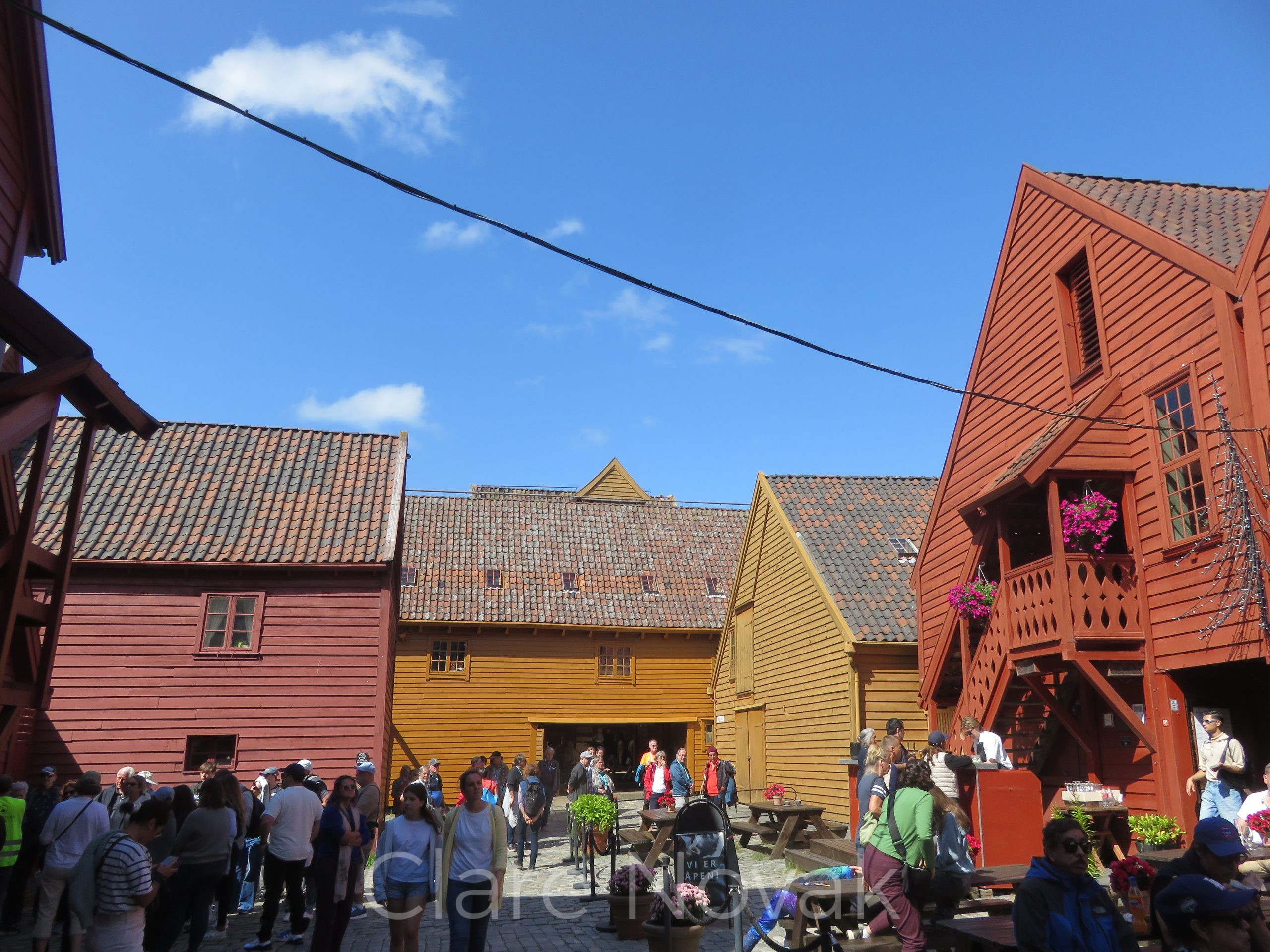

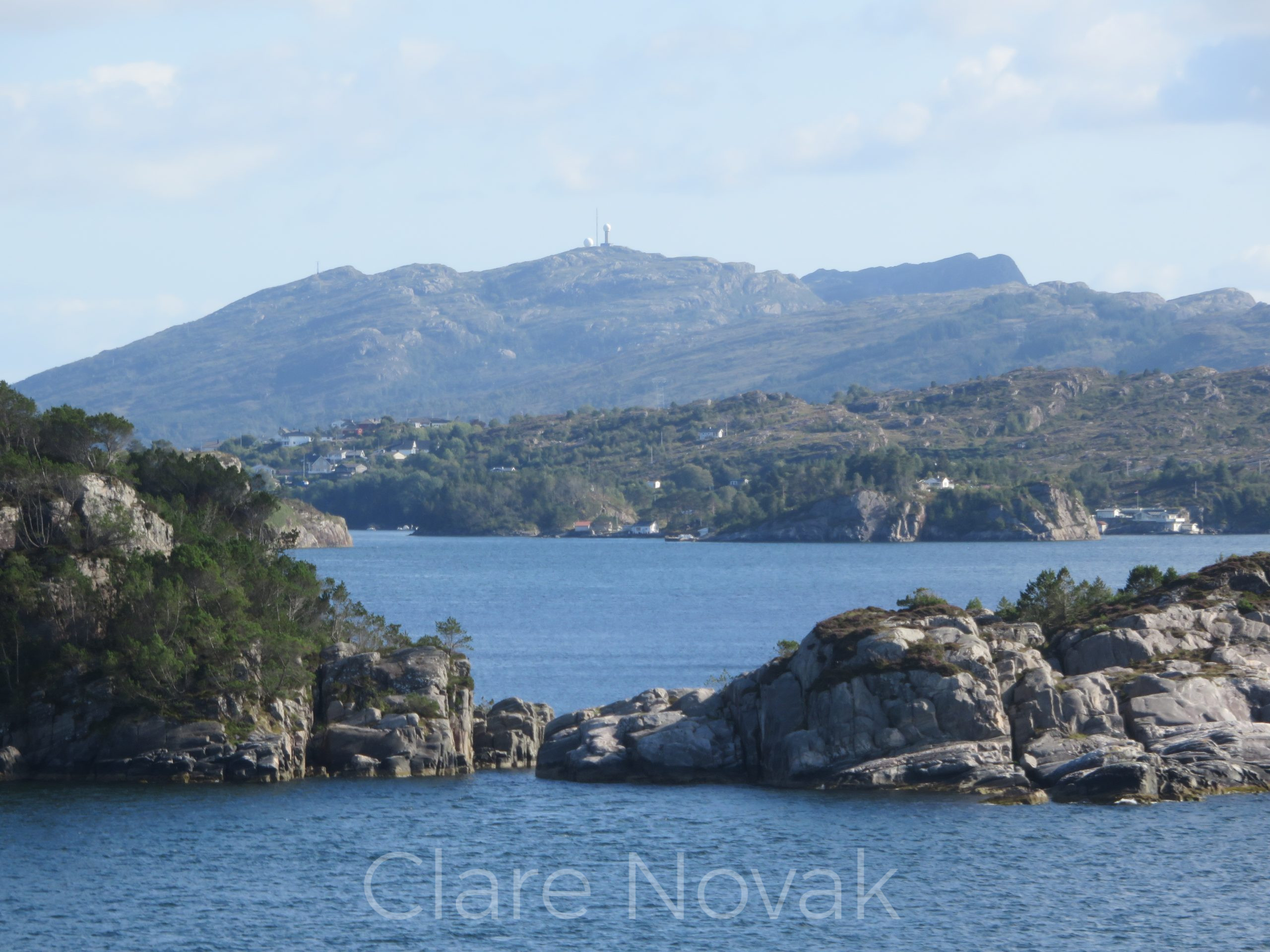
Interesting houses and streets in Bergen made for a lovely ramble. In the morning free time, we walked into town. Steep cobblestone alleys were lined with charming, old wooden houses. Many had interesting quirks like ornate hardware on the door or ornately carved flower boxes. We simply wandered, drawn one way or another by brightly colored houses or interesting architecture. Although it was July, what for us are late spring flowers, bloomed abundantly. We appreciated the well-tended small gardens that dotted the streets.
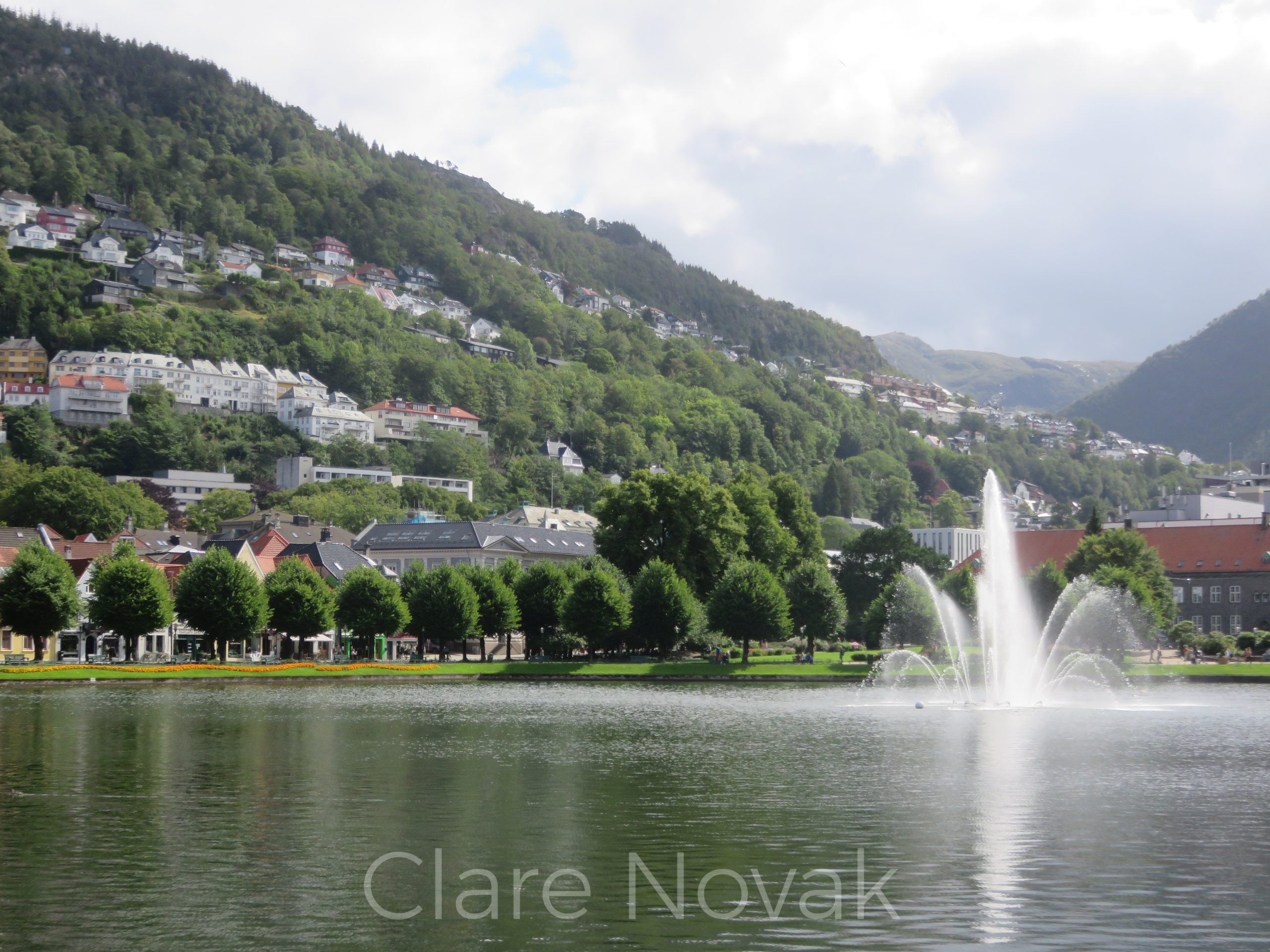
Bergen was the one time capital of Norway and so was possessed of the national opera house beautifully set facing a city lake encompassed by a garden. The Opera Pavilion was meticulously surrounded with colorful flowers and set in an open space that transitioned from the city street of the Opera House to the city lake. If ever I should return to Bergen, I would plan my own walking tour, visit the art museum, wander the fish market and explore the shops and restaurants.
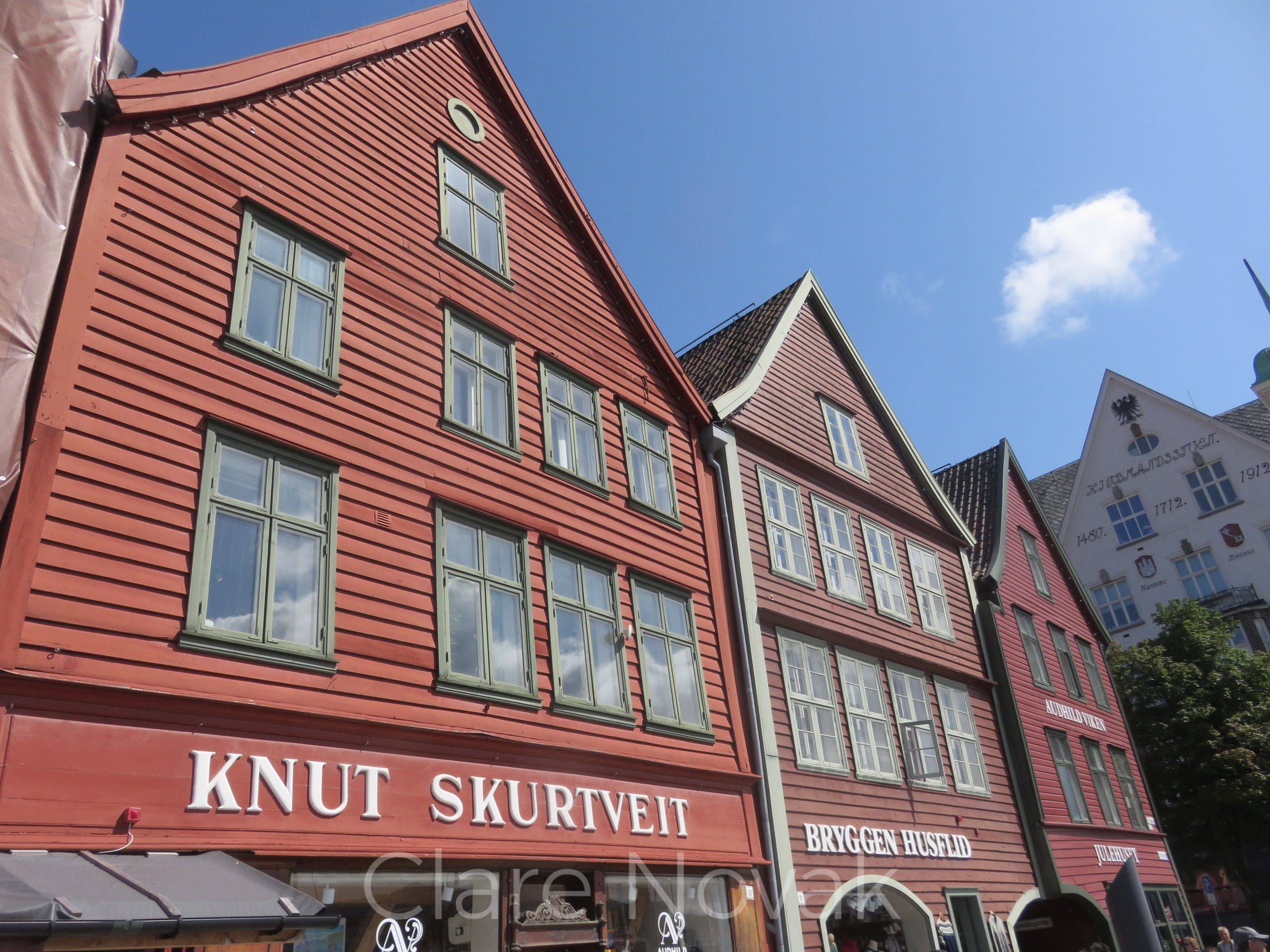
The afternoon tour taught us about the German influence. In 1360, the German Hanseatic League set up one of its import and export offices at Bryggen, dominating trade for almost 400 years. To stroll through the narrow alleyways and overhanging galleries is to step back into the mists of time and a bygone era. Bryggen is now part of our common heritage and has a place on UNESCO’s World Heritage List, and the city of Bergen, Norway is a designated World Heritage City. The world heritage site consists of the old Hanseatic wharf and buildings, and one of the best known urban areas from the Middle Ages in all of Norway.
That evening was farewell to Norway. We had lucky weather all three days.
For the start of the journey:
https://www.clarenovak.com/location/reykjavik-a-year-in-the-arriving/
On Bergen:


